Why Your PDF Archive Is the Best Training Data You Already Own
Indigo Tech Foundry
- AI Automation
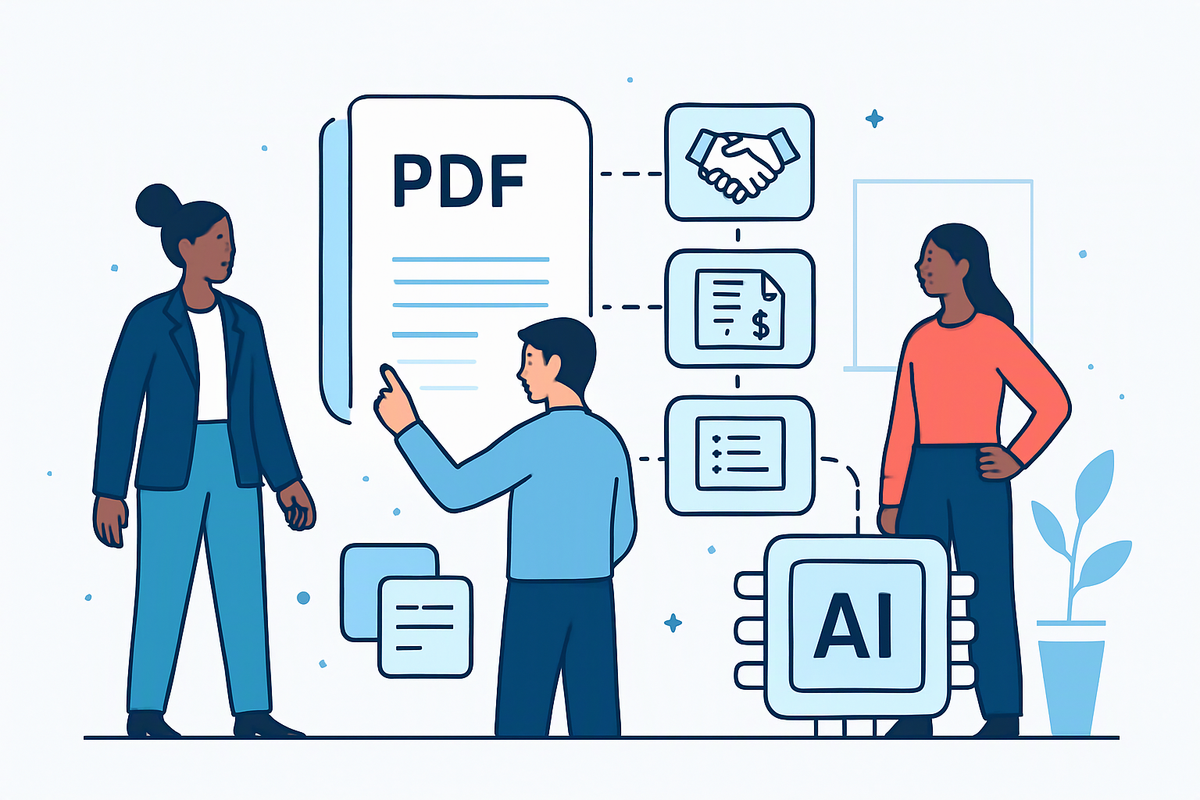
Most Hong Kong teams looking at AI workflow automation start by shopping for a chatbot, when the real asset is already sitting in their cloud storage. The contracts, delivery notes, invoices and technical specs you have accumulated over years contain the exact logic your operations run on, yet they stay locked in PDFs that no software can read reliably. Turning that archive into structured data is the highest-return AI project you can commission, because it feeds every other tool you might build later.
Document automation works best when you treat it like a data pipeline, not a magic wand. You pick the document type that causes the most manual re-entry, say purchase orders from WhatsApp or emailed quotation PDFs, and you build a workflow that extracts fields into a spreadsheet or directly into Odoo. At Indigo Tech Foundry we keep a human review step in the loop; the AI cuts about 30 minutes of manual entry per document to around 30 seconds with over 90 percent accuracy, but a person still verifies the output before it hits your system. That guardrail is what makes the automation trustworthy enough to run unattended.
The mistake is trying to boil the ocean. Teams often ask for a single AI agent that reads every PDF format the company has ever received. A leaner approach is to start with one high-volume, high-pain document type, prove the accuracy, then expand. A property agency might begin with tenancy agreements; a retailer might start with supplier delivery notes. Once the structured data lands in a database, you can build dashboards, trigger low-stock alerts, or feed a bilingual AI assistant that answers supplier queries at 2am without waking your operations manager.
Privacy and data residency matter more than the model you choose. If your documents contain NRIC numbers, bank details or contract values, the extraction must run on infrastructure you control or on a provider that guarantees Hong Kong data residency. We design the pipeline so the raw PDF never leaves your approved environment, and the extracted JSON is the only artefact that moves downstream. That constraint shapes the architecture more than any prompt engineering decision.
Search behaviour is shifting fast. Shoppers using ChatGPT, Gemini or Copilot already expect product data to be structured, and the same expectation is moving into B2B procurement. According to Shopify, merchants who expose clean product catalogues through structured data see earlier adoption in AI-assisted checkout flows, which are rolling out mainly in the US first. Hong Kong merchants who prepare their data now, whether it is a Shopify catalogue or an internal parts list, will be the ones recommended when AI assistants become the default buying interface.
Indigo Tech Foundry builds apps, websites and AI tools for Hong Kong businesses and offers a free 30-minute consultation to map the first document type worth automating. The conversation starts with your existing files, not a wish list of features. If you have a folder of PDFs that someone opens every morning to copy numbers into a spreadsheet, that is your starting line.
The next time you hear a vendor pitch a generic AI chatbot, ask them how it handles your specific delivery note format. The answer will tell you whether they are selling a demo or a solution. Your archive already knows how your business works; the job is to teach your software to read it.