Fix the Workflow Before You Automate It with AI
Indigo Tech Foundry
- AI Automation
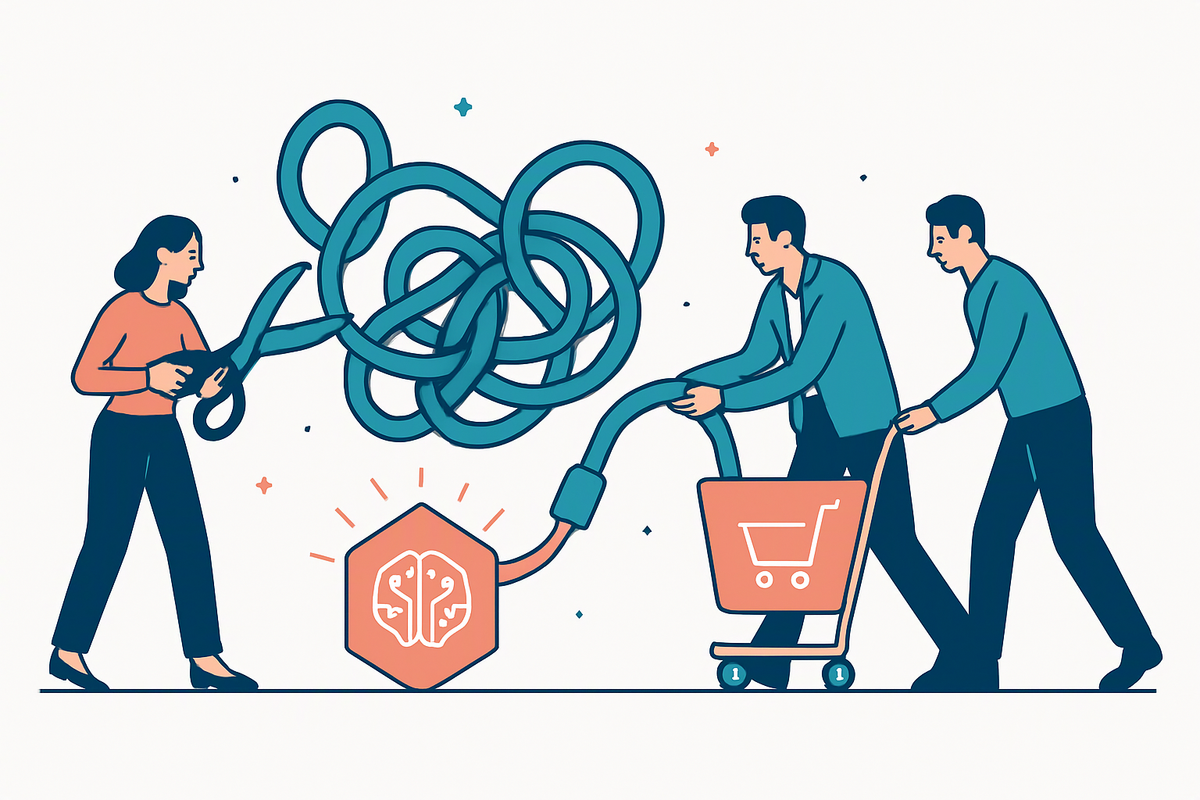
Many Hong Kong teams rush into AI workflow automation hoping to solve bottlenecks, only to find the same delays now happen faster and at greater scale.
The problem is rarely the technology. It is that the process being automated was never designed for efficiency. Steps that made sense when paperwork moved between desks become pointless when software handles the handoff. Approval chains built for risk aversion turn into dead weight when data flows instantly. If you feed a cluttered workflow into an AI agent, you get a cluttered automated workflow.
Start by writing down every step of the task you want to improve. Include the handovers, the wait times, the duplicate checks and the workarounds people have invented. A property agency we spoke with discovered their valuation report process had twelve touchpoints, yet only three added value. The rest were legacy sign-offs from a paper era. Removing those nine steps before any AI was introduced cut the turnaround from two days to four hours.
Once the map is clean, look for the parts that are repetitive, rule-based and high-volume. Those are the candidates for AI. Document intake is a classic example. Invoices, tenancy agreements, customs forms and survey reports arrive as PDFs every day. An AI tool can extract the key fields, dates, amounts, parties, clauses, and push structured rows into your CRM or spreadsheet. The extraction reaches over 90 percent accuracy, and a human review step stays in place. What used to take thirty minutes of manual entry per document drops to around thirty seconds.
The same principle applies to customer enquiries. A bilingual AI assistant can answer routine questions about stock availability, delivery windows or fee schedules at any hour. It logs every conversation in the CRM and triggers a follow-up task for the sales team. But this only works if the knowledge base behind the assistant is current. Feeding it outdated price lists or discontinued product codes creates more work, not less.
Integration matters as much as the model. The automation must write to the systems your team already uses, Odoo, Google Sheets, Shopify, WhatsApp Business, email. If the output lands in a separate dashboard nobody checks, the process stalls. At Indigo Tech Foundry we build these connections as part of the automation, so the data flows where it is needed without extra copy-paste steps.
Data privacy and running costs belong in the decision from day one. Know where your documents are processed, who can see them and what the per-transaction cost looks like at scale. A pilot that costs pennies per document can become expensive at thousands per month. We help Hong Kong businesses work through these questions in a free 30-minute consultation, then design the leanest solution that fits.
The sequence is always the same. Simplify first. Automate second. Measure third. Skip the first step and you automate waste.